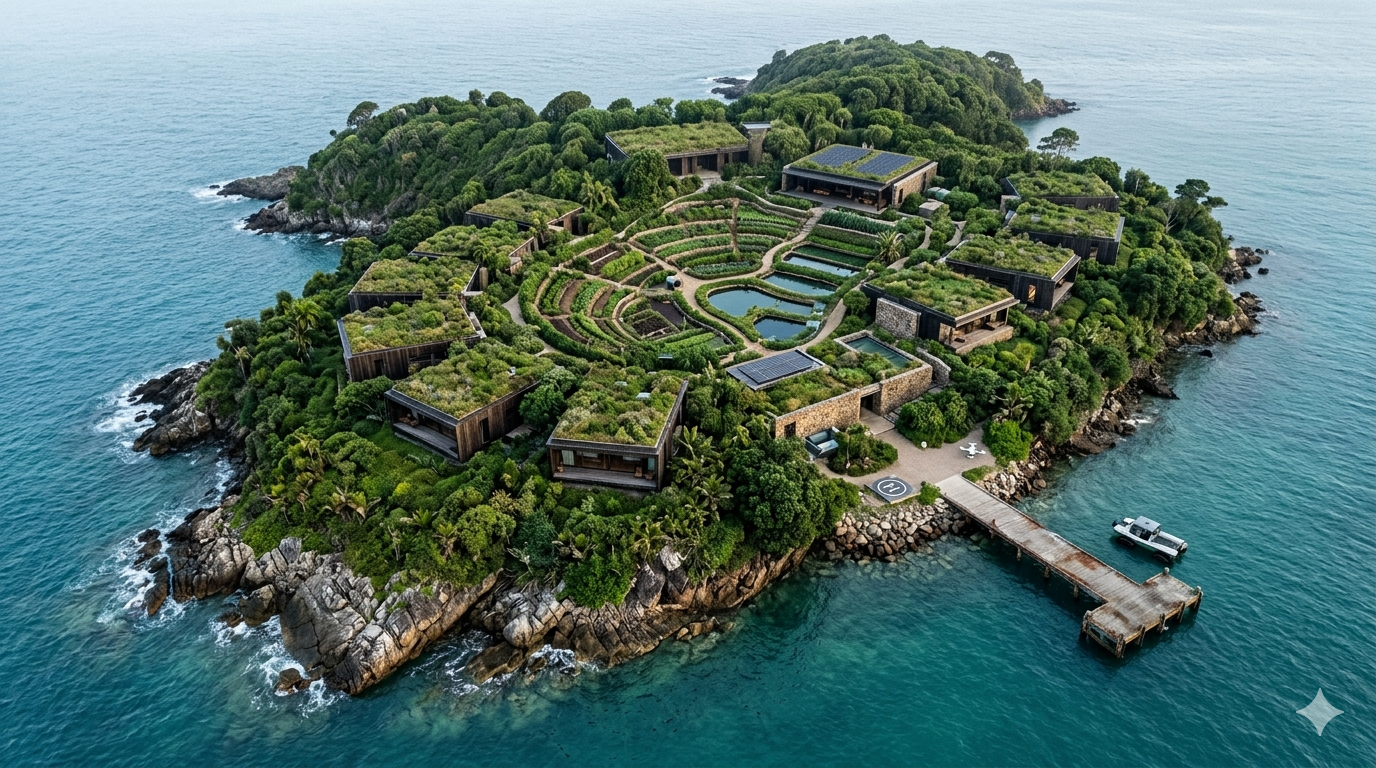
Remote Wellness Hospitality represents the pinnacle of luxury for high-end seekers, with private islands and off-grid retreats leading the global trend. However, in my experience guiding these developments, there is often an invisible friction between the initial feasibility study and the long-term operational reality of a Remote Wellness Hospitality asset.
The «Year Three» Moment of Truth in Remote Wellness Hospitality
In my career leading international hotel operations, I have observed that the third year is typically the «moment of truth» for remote assets. This is the stage where the novelty phase stabilizes, initial construction warranties expire, and the true cost of environmental friction—salt, humidity, and isolation—reveals itself.
If a Remote Wellness Hospitality project wasn’t designed with Operational Resilience from the beginning, this is precisely where operating expenses (Opex) can surge far beyond the original projections, putting the entire investment at risk. Understanding the nuances of Remote Wellness Hospitality means anticipating these costs before they erode the P&L.
Hidden Costs in Remote Wellness Hospitality Assets
While a render looks perfect, it doesn’t account for the daily logistical battles. These are just a few examples of the many dimensions and «blind spots» we must analyze to protect the longevity of a Remote Wellness Hospitality development:
-
Complex Supply Logistics: The real cost of a cold chain that depends on boat schedules, tides, and seasonal sea conditions.
-
Critical Infrastructure Resilience: Managing energy, water desalination, and waste systems autonomously while maintaining a five-star luxury standard.
-
Accelerated Asset Maintenance: The aggressive impact of harsh environments on materials that often require maintenance cycles 3x more frequent than expected.
In remote developments, there are countless similar layers—from staff housing logistics to emergency medical protocols—that must be integrated into the financial model to ensure Remote Wellness Hospitality success.
Designing for Remote Wellness Hospitality ROI
When you move off-grid, the challenge shifts from aesthetic design to system survival. My mission is to guide my clients through the safest possible path to their return on investment. I believe the success of Remote Wellness Hospitality in an isolated location doesn’t lie in the sophistication of its equipment, but in the robustness of its fundamentals.
According to the Global Wellness Institute, the wellness economy is growing rapidly, but long-term profitability in Remote Wellness Hospitality requires a specialized approach to resilient operations.
«If the land itself is the luxury, the construction must be its guardian, not its enemy.»
Bridging the Gap in Remote Wellness Hospitality Operations
To achieve true Operational Resilience, we must look beyond the initial Capex. Many developers overlook the cost of specialized labor in isolated areas or the price of sustainable energy redundancy. My background in high-stakes logistics—from international airlines to global hotel chains—allows me to see the «unseen» risks that others miss in Remote Wellness Hospitality.
Furthermore, a successful Remote Wellness Hospitality model must account for the «human opex»—the cost of keeping a high-performance team motivated and healthy in an isolated environment. Without a happy team, the guest experience—and the revenue—will eventually suffer.
The Future of Remote Wellness Hospitality
Financial viability should not be a barrier to a wellness or regenerative purpose; it should be its greatest guardian. A project that is not economically sustainable cannot generate a positive impact on the land or the community in the long term.
As a consultant with a hybrid profile, I help investors bridge the gap between an inspiring concept and a high-performance asset.
For more insights on our methodology, you can read our previous article on Designing Wellness Hotels as Integrated Systems.

Ana María Pittaluga
Hospitality Development Executive and WITT AP® consultant. With deep expertise in operational management and financial viability, she specializes in developing wellness-integrated hotel projects across LATAM, the US, and Europe. Her mission is to help investors and owners transform traditional hospitality into high-performance, healing-focused assets.