Why I moved from traditional hospitality to wellness hospitality development. A look into the shift from ‘comfortable’ hotels to true healing sanctuaries.
The Turning Point: When Comfort Was No Longer Enough
In the evolving landscape of wellness hospitality development, I have realized that while the industry has mastered comfort, it often misses genuine restoration. After more than two decades in travel and hospitality, I began to notice a disconnect.
After more than two decades in the travel and hospitality industry, I realized hotels master comfort but often miss restoration. This is why my work shifted toward wellness.
I reached a moment that many professionals quietly experience at some point in their careers.
A sense that something needed to change.
For years I had worked with different types of hotel projects. Luxury properties, boutique concepts, traditional hospitality models. The work was interesting, the projects were ambitious, and the industry itself is one I deeply respect.
But about five years ago, I began to feel a growing disconnect.
Not with hospitality itself, but with the type of projects I wanted to dedicate my energy to.
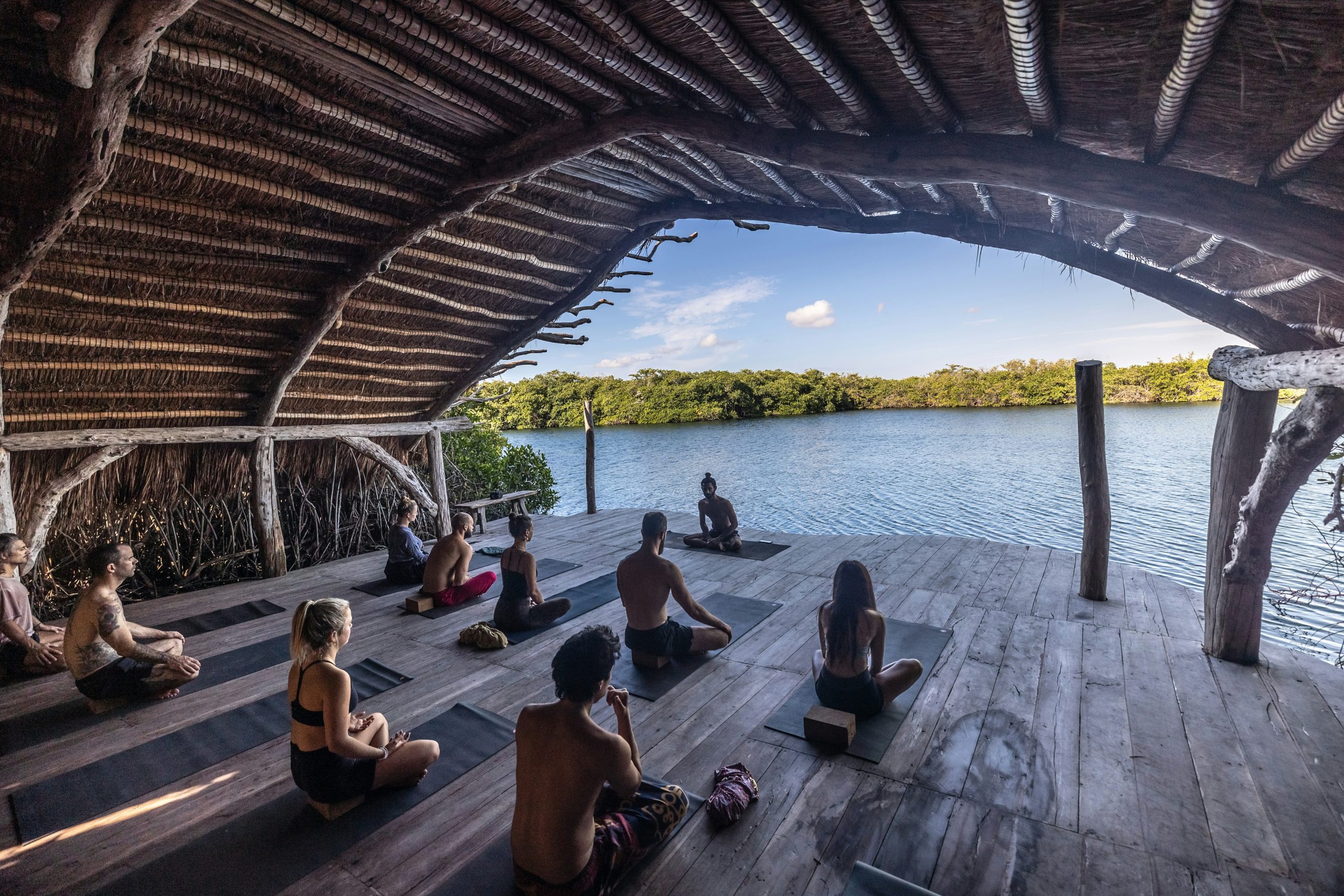
Around that time, my personal life was already deeply connected to practices related to wellbeing—a journey that began more than 10 years ago. Through time in nature, breathwork, meditation, and other forms of personal reflection, I experienced firsthand how these practices slowly reshape how we experience stress, health, and balance. This decade of personal integration eventually became the foundation for my professional shift.
Through those experiences, I began to notice something that felt increasingly obvious.
Many hotels promise rest. But very few are intentionally designed to support genuine restoration.
Hospitality has mastered comfort, service and aesthetics. Beautiful rooms, exceptional dining, impeccable service. Yet the deeper potential of these spaces — their ability to support meaningful personal reset — often remains underdeveloped.
That realization stayed with me for a long time.
Gradually, it began to influence how I thought about hotel development itself.
What if hospitality spaces were intentionally designed not only for leisure, but also for renewal?
What if a hotel could become a place where people reconnect with fundamental elements that many of us have become disconnected from — nature, stillness, rhythm, community?
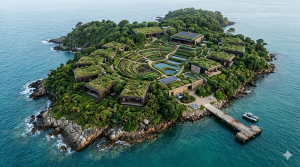
This line of thinking eventually led me to start exploring concepts built around the natural elements: water, air, fire and earth.
Not as aesthetic inspiration, but as guiding principles for how guests experience a place.
Smaller properties.
Deeper connection with nature.
Spaces that invite pause rather than stimulation.
The Birth of the Soul Experience Concept
Over time, this thinking evolved into what I later called the Soul Experience concept — an approach to wellness hospitality development, that integrates hospitality design, wellbeing practices, and community engagement.
The first opportunity to translate this thinking into a professional project arrived more than 3 years ago, when I developed a feasibility study for a hospitality concept built around these ideas. Shortly after, other projects followed, still in development phase.
These projects remain early explorations. They are part of an ongoing process of learning, refining and understanding how wellness can be thoughtfully integrated into hospitality development.
But they confirmed something important for me.
There is growing interest in hospitality experiences that go beyond relaxation or luxury.
Travelers increasingly seek environments that allow them to disconnect from constant stimulation and reconnect with themselves, with nature, and with a different pace of living.
The Intersection of Wellness and Viability
For me, the most interesting challenge now lies in exploring how these concepts can also be economically viable and operationally sustainable.
Because meaningful hospitality experiences should not only inspire guests — they should also support healthy businesses, respectful development, and long-term value for the communities that host them.
That is the space where my curiosity and work are currently focused.
The intersection between hospitality, wellbeing, and responsible development.
And perhaps more importantly, the question of how hotels can evolve from places of temporary escape into environments that genuinely support restoration.
Hospitality is evolving from a service industry into a transformation industry. My mission is to ensure that «healing» and «profitability» are not mutually exclusive, but rather, they fuel each other. I am here to guide that evolution for investors who, like me, believe that a hotel can be a vehicle for restoration.
If you have the same vision for your project, let´s connect.

Ana María Pittaluga
Hospitality Development Executive and WITT AP® consultant. With deep expertise in operational management and financial viability, she specializes in developing wellness-integrated hotel projects across LATAM, the US, and Europe. Her mission is to help investors and owners transform traditional hospitality into high-performance, healing-focused assets.